
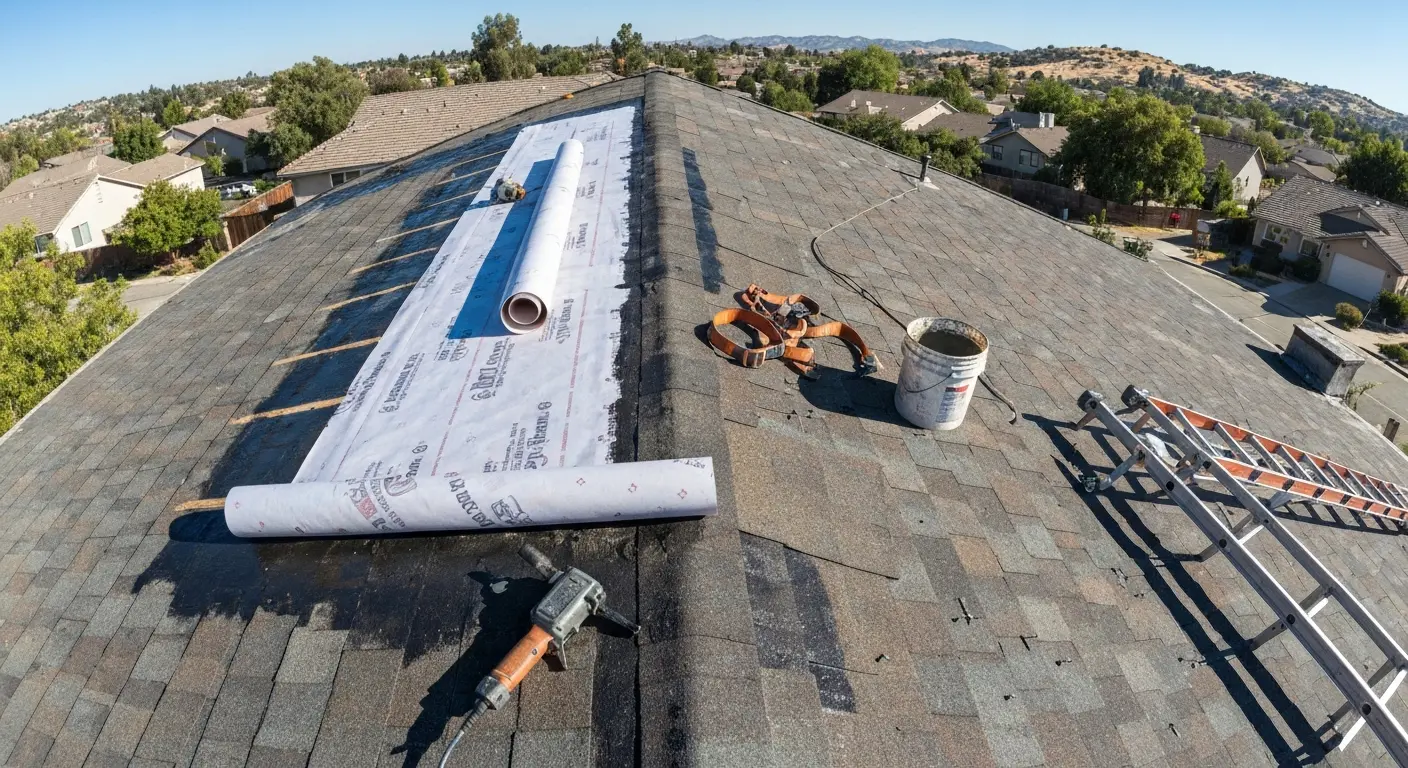
Short answer: before Sacramento’s rainy season, prioritize cracked or slipped tiles, debris-filled valleys, worn valley underlayment, failed flashing, aging shingles, clogged or damaged gutters, and any early leak signs. Fix what you can while the weather is still dry. A free roof inspection turns curb clues into a written plan; localized work belongs on roof repair; overflowing eaves often need gutters; active water during a storm belongs on emergency roof repair.
Long, dry Central Valley summers hide small roof weaknesses. Sealants dry out, valleys collect oak and pine debris, and tile underlayment can age while the surface still looks fine from the street. When winter rain bands arrive—often starting in November—those weak points get a sustained water test. This guide covers seven problems homeowners commonly notice before or during that shift, what a pro looks for, and which service path usually fits. It does not assume every issue requires a full reroof.
1. Cracked or Slipped Roof Tiles
What you might notice: broken tiles on the ground, gaps in a tile course, tiles that sit crooked after wind, or daylight visible where a tile should cover the underlayment. Why rainy season matters: tile surfaces shed water only when they sit correctly; cracked or displaced tiles let rain reach the layer underneath. How a pro diagnoses it: they walk the roof when safe, note how many tiles are affected, and check whether the underlayment beneath is still intact. Service options: reset or replace individual tiles and seal transitions when the surrounding field is sound—hire roof repair. When underlayment is brittle across a slope or matching tile is no longer practical for a large area, roof replacement may be the more durable path. Prefer inspection first when you only see a few broken pieces and are unsure how far the problem goes.
2. Debris and Drainage Problems in Roof Valleys
What you might notice: leaves, needles, or twigs packed where two roof planes meet; dark staining along the valley; water that seems to sheet sideways after a storm. Why rainy season matters: valleys concentrate runoff. Debris turns that channel into a dam, so water climbs under adjacent shingles or tile edges. How a pro diagnoses it: they clear or assess debris, inspect valley metal or lining for abrasion and separation, and look for overflow marks at the edges. Service options: cleaning and targeted valley repair often sit on roof repair. Pair the visit with gutter and edge drainage review on gutters when eaves are also overflowing. If valley lining and underlayment are worn out along long runs, the written findings may point beyond a one-time clean-out.
3. Deteriorated Valley Underlayment
What you might notice: recurring stains below a valley even after surface patches; soft decking clues in the attic; tile or shingles that look mostly intact while water still gets in. Why rainy season matters: underlayment (felt or modern membrane) is the real water-shedding layer in many valleys and under tile systems. Summer heat ages it; winter rain finds every tear or open lap. How a pro diagnoses it: they inspect openings, lifted materials, and attic clues, and explain when surface tile or shingles are not the true failure. Service options: localized underlayment and valley lining work can be part of scheduled roof repair when the field still has life. Widespread underlayment failure—especially under aging tile—often means planning roof replacement rather than stacking temporary patches. A free roof inspection is the right first step when you suspect the layer you cannot see from the curb.
4. Damaged or Poorly Sealed Roof Flashing
What you might notice: stains near chimneys, skylights, sidewalls, or vents; cracked or peeled sealant at pipe boots; metal that looks lifted or corroded. Why rainy season matters: flashing directs water over the roofing material at every transition. Heat-cycled sealant often fails first; winter rain then follows the gap into the structure. How a pro diagnoses it: they trace the water path on the roof, check step flashing, counter-flashing, valley metal, and penetration bases, and separate a sealant touch-up from a flashing redesign. Service options: most flashing and pipe-boot fixes belong on roof repair. Background reading: roof flashing repair in Sacramento. If water is pouring in during a storm, start with emergency roof repair instead of waiting for a convenience slot.
5. Missing, Loose, or Aging Shingles
What you might notice: tabs in the yard after wind, bare spots on a slope, heavy granule piles in gutters, curling or brittle edges. Why rainy season matters: asphalt that baked through summer loses flexibility; the first strong storm can lift weakened tabs and open the field to rain. How a pro diagnoses it: they compare isolated missing pieces against widespread granule loss, cupping, and prior patch patterns. Service options: a few missing or damaged shingles on an otherwise sound roof are classic roof repair. Frequent returns to the same slopes, large bare areas, or a roof near the end of its expected life belong in a replacement conversation—not another round of temporary patches. Unsure? Schedule a roof inspection.
6. Clogged, Leaking, or Damaged Gutters
What you might notice: water sheeting over the gutter face in rain, sagging runs, seams that drip, staining at eaves, or erosion below downspouts. Why rainy season matters: gutters move roof runoff away from fascia and the foundation. When they clog or pull away, water soaks the roof edge and can mimic a field leak indoors. How a pro diagnoses it: they check pitch, hangers, seams, downspout discharge, and whether overflow is wetting the roof edge. Service options: repair, seamless replacement, downspout routing, and optional guards are hired on gutters. If you also see ceiling stains or suspect a field failure, pair gutter work with a roof inspection so the right system gets fixed first.
7. Existing Roof Leaks or Warning Signs of Water Intrusion
What you might notice: ceiling or wall stains, musty attic odor, damp insulation, peeling paint near exterior walls, or drips that return with every storm. Why rainy season matters: small entry points that stayed quiet in dry months become active once rain is sustained. How a pro diagnoses it: they do not treat the stain alone—they trace the path on the roof and in the attic when accessible. Service options: if water is actively entering now, contain it indoors, stay off the wet roof, and hire emergency roof repair. Read what to do when your roof leaks during a Sacramento storm for indoor first steps. When the home is dry and the leak is localized, use roof repair. When leaks keep returning across an aging roof, compare roof replacement after an honest inspection.
How to Prioritize Before the Rain Arrives
- Active water indoors → emergency roof repair first; do not climb the wet roof
- Visible tile, shingle, flashing, or valley damage while the home is dry → schedule roof repair or a free inspection
- Overflowing or sagging gutters → gutter repair or replacement, and inspect the roof edge if stains appear
- Widespread aging, repeated leaks, or soft decking clues → inspection with replacement planning, not another temporary patch
For a shorter seasonal checklist (gutters, valleys, sealant, and post-storm walkthroughs), see our Sacramento roof maintenance checklist. When you want written findings before you authorize work, start on the free roof inspection page.
Ready to check your roof before the rain?
PRC 13 Roofing provides free inspections and written findings for Sacramento-area homes. Call or request a visit so cracked tiles, valleys, flashing, shingles, gutters, and leak signs are reviewed before winter storms test them.
Schedule a Free Inspection