
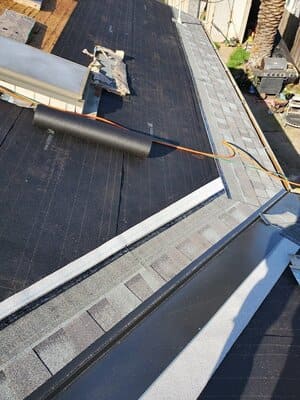
A roof leak in Sacramento is stressful because the water you see indoors rarely tells the whole story. Rain can enter at a flashing joint, pipe boot, valley, skylight, or damaged shingle, then travel along underlayment, decking, or framing before it reaches drywall. A good repair starts by protecting the home and tracing that route, not by treating the stain as the source. This article explains that process. For a scheduled leak diagnosis, start on roof repair. If water is entering now, use urgent leak response instead.
What to Do While Water Is Entering
Move furniture, electronics, rugs, and valuables away from the affected area. Put a bucket beneath an active drip and use towels to limit spread. Photograph the stain, dripping, and any roof damage visible safely from the ground. Do not climb onto a wet roof or attempt to pull shingles back in a storm; tile, shingles, and metal are all much more dangerous when wet.
- Keep people away from wet areas near outlets, fixtures, or electrical panels.
- Do not cut into a bulging ceiling or open a roof area unless a qualified professional says it is safe.
- Record the date, weather conditions, interior damage, and any debris impact you observed.
- Call for emergency roof repair when water is active, a large section is exposed, or a tree has struck the roof.
Why Sacramento Roofs Leak
Sacramento roofs work through long hot, dry periods followed by winter rain and wind. Heat can age sealant and make some shingles brittle. Leaves can accumulate in valleys before a storm. Wind can lift a tab or ridge cap, and rain can then reach the protective layers below. On tile roofs, the tile may look intact while the underlayment or flashing beneath is the actual weak point.
Homes in Folsom and Rocklin can see similar patterns, especially when hillside wind or ridge exposure lifts edges and pushes water into valleys. The exact roof type and drainage layout matter more than the city name, but the same diagnosis principle applies: find the entry point and correct the water path rather than guessing from the stain alone.
Gutters, Drainage, and Valleys
Not every interior stain starts with a hole in field shingles. Overflowing gutters, clogged downspouts, and debris-packed valleys can force water under edges, into fascia transitions, or toward wall flashings. After storms, leaves and pine needles commonly settle in Sacramento valleys and roof edges. A leak inspection should include how water leaves the roof, not only whether a shingle is missing.
Valleys deserve particular attention because they collect more runoff than an open roof field. Damaged valley metal, deteriorated underlayment at the valley, or material piled where two slopes meet can create repeated wet spots that look like random ceiling stains. Clearing debris is useful maintenance, but it does not replace repairing failed flashing, underlayment, or roofing material.
Common Leak Locations
Penetrations are frequent leak locations because pipes, vents, chimneys, and skylights interrupt the roof surface. Flashing must overlap correctly so water sheds outward. When flashing has corroded, shifted, or been covered with failing sealant, water can get behind it. Read our roof flashing repair guide for a closer look at those transitions, or our skylight leak repair guide when moisture appears around a skylight.
Missing shingles, cracked tiles, exposed fasteners, and damaged ridge materials can also become entry points. A leak after wind may be near the visible missing piece, but the inspection should include the surrounding slope and adjoining transitions. Our tile roof repair information explains why surface appearance is only part of the diagnosis on tile systems.
How a Professional Leak Inspection Works
The inspection begins with context: when the leak appeared, which direction rain was blowing, whether it happens only in heavy storms, and whether there has been recent work near the roof. Interior staining, attic moisture, and daylight around penetrations can help narrow the search. On the roof, the inspector examines the system above and uphill from the interior symptom, including roofing material, flashings, valleys, pipe boots, and drainage paths.
The goal is to identify the failed detail and the condition around it. A single split pipe boot may call for a focused repair. A brittle field of shingles, repeated patches, or compromised underlayment across a tile roof may change the conversation. PRC 13 can explain the findings and whether targeted roof repair, temporary stabilization, or a broader plan fits the roof condition.
Temporary Protection Versus Permanent Repair
Temporary work is meant to limit further water entry when weather or access makes a full repair impractical. That may include containing water indoors and, when safe and appropriate, temporary exterior protection. Temporary measures are not the same as correcting the failed flashing, underlayment, or roofing detail. Permanent repair restores the water-shedding layers so the roof can perform through later storms.
Interior drying and drywall work matter, but they come after the roof has been made watertight. A permanent repair may involve replacing damaged shingles, rebuilding a flashing transition, renewing a penetration detail, correcting a valley condition, or addressing material beneath a tile section. The correct scope depends on what failed and whether adjacent material can be safely integrated without creating another weak point.
Insurance, Documentation, and Timing
If wind, debris, or another sudden event may have caused the damage, keep your photos and avoid discarding damaged material until you understand your insurer's instructions. Homeowners insurance decisions are made by the insurer under the policy; condition documentation and a repair assessment can help you describe what happened, but they do not guarantee coverage. Prompt mitigation is important because waiting can allow additional water damage.
When a Leak Signals a Bigger Decision
Not every leak means replacement. A localized failure on a roof with solid surrounding material may be a sensible repair. Recurrent leaks in different areas, widespread curling or granule loss, cracked and brittle shingles, aging tile underlayment, soft decking, or a roof near the end of its useful life can make repeated patches less practical. A roof inspection gives you the information to compare a repair against replacement without guessing.
How to Prevent the Next Leak
After repair, keep roof edges, valleys, and gutters clear so water can drain as designed. Check the property from the ground after heavy wind and before winter rain for fallen branches, material on the ground, or new staining. Do not pressure wash roofing or apply unapproved coatings to hide a problem. Regular observation does not replace a professional inspection, but it helps you catch changes early and gives the roofer a better timeline when a concern develops.
It is also helpful to keep prior repair documents and photos. A future inspection can compare the current condition to the original repair area and distinguish a new failure from a recurring one. If work such as solar, satellite, HVAC, or tree trimming takes place near the roof, inspect the area afterward from the ground and report any change promptly.
Get a Clear Next Step
If your Sacramento home has a new stain, active drip, or visible roof damage, act before the next weather event. For water actively entering the home, call PRC 13 for emergency roof repair. For a scheduled leak diagnosis and permanent repair plan, request roof repair or a roof inspection to compare repair versus replacement.
Active water entering now? Call for emergency roof repair. For scheduled leak diagnosis, see roof repair. Safety steps: what to do in a Sacramento roof emergency. Roof inspection · Sacramento · Contact.